Lumber
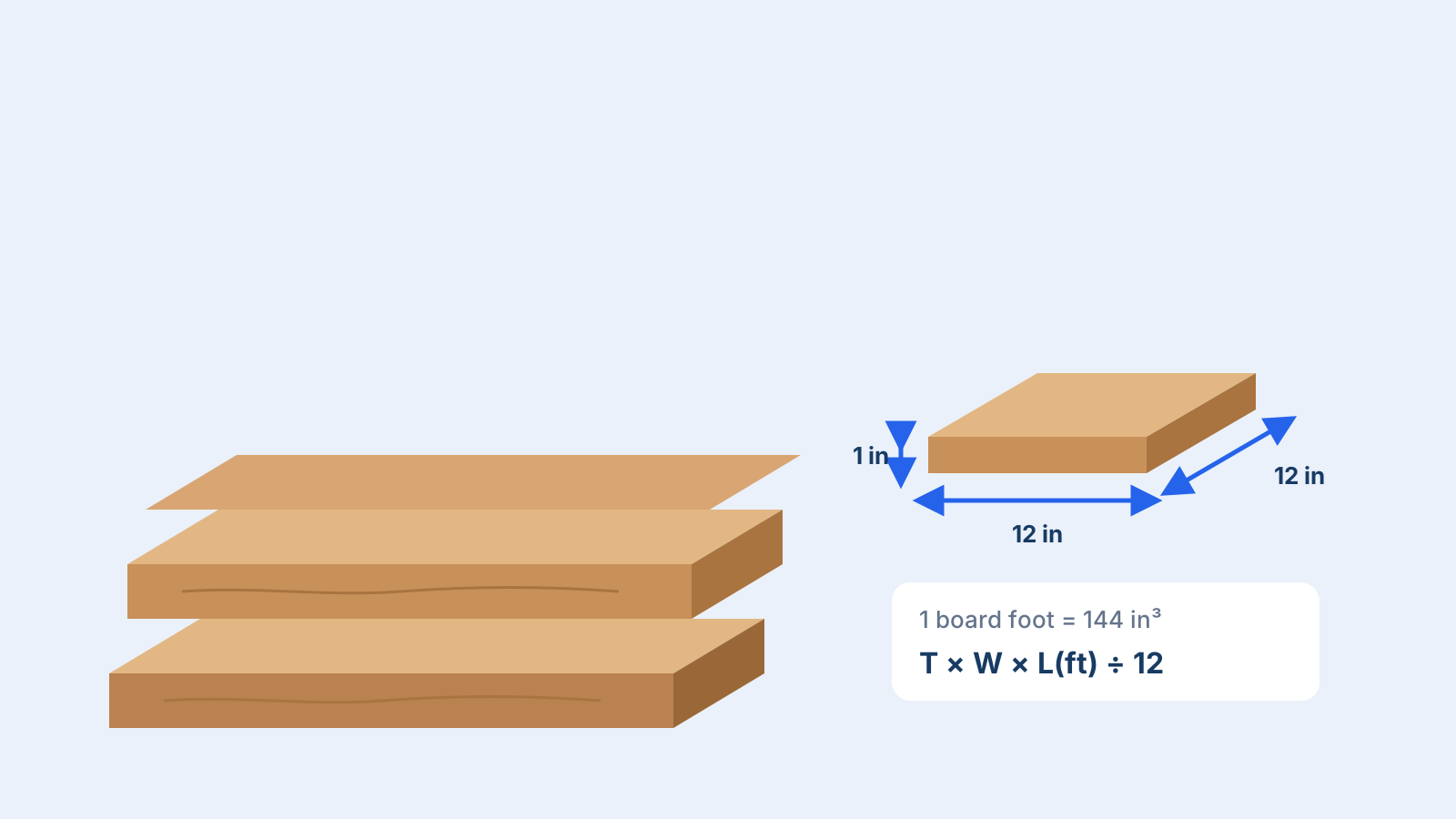
What Is a Board Foot in Lumber?
A clear explanation of the board foot, how to calculate board feet for hardwood and lumber, nominal vs actual sizes, and how to estimate project cost.
2 min read
22 free calculators for concrete, gravel, landscaping, pavers and lumber · imperial & metric
Explore all toolsThis calculator works out how many rows of decking fit across your deck, how many boards each row needs and the total number of boards to buy. It also estimates screws based on your joist spacing.
Enter your measurements and press Calculate to see quantities, a material breakdown and an optional cost estimate.
Each row needs a board width plus one gap; the final row needs no gap, which is why one gap is added to the deck width before dividing.
A 16 × 12 ft deck with 5.5 in boards, 3/16 in gaps, 16 ft boards and no waste.
Result: 26 boards of 16 ft; with 10% waste, buy 29.
Around 3/16 in (5 mm) is a common gap for wood decking, but wet pressure-treated boards shrink and are often installed tight. Composite boards have specific manufacturer gaps.
Yes, decking normally runs perpendicular to the joists. Diagonal decking needs closer joist spacing and produces more waste.
A clear explanation of the board foot, how to calculate board feet for hardwood and lumber, nominal vs actual sizes, and how to estimate project cost.
Results are estimates based on the measurements and assumptions you enter. Always confirm product specifications, local building codes and final quantities with your supplier or a qualified professional. See our disclaimer.