Landscaping
How to Estimate Topsoil for Your Lawn
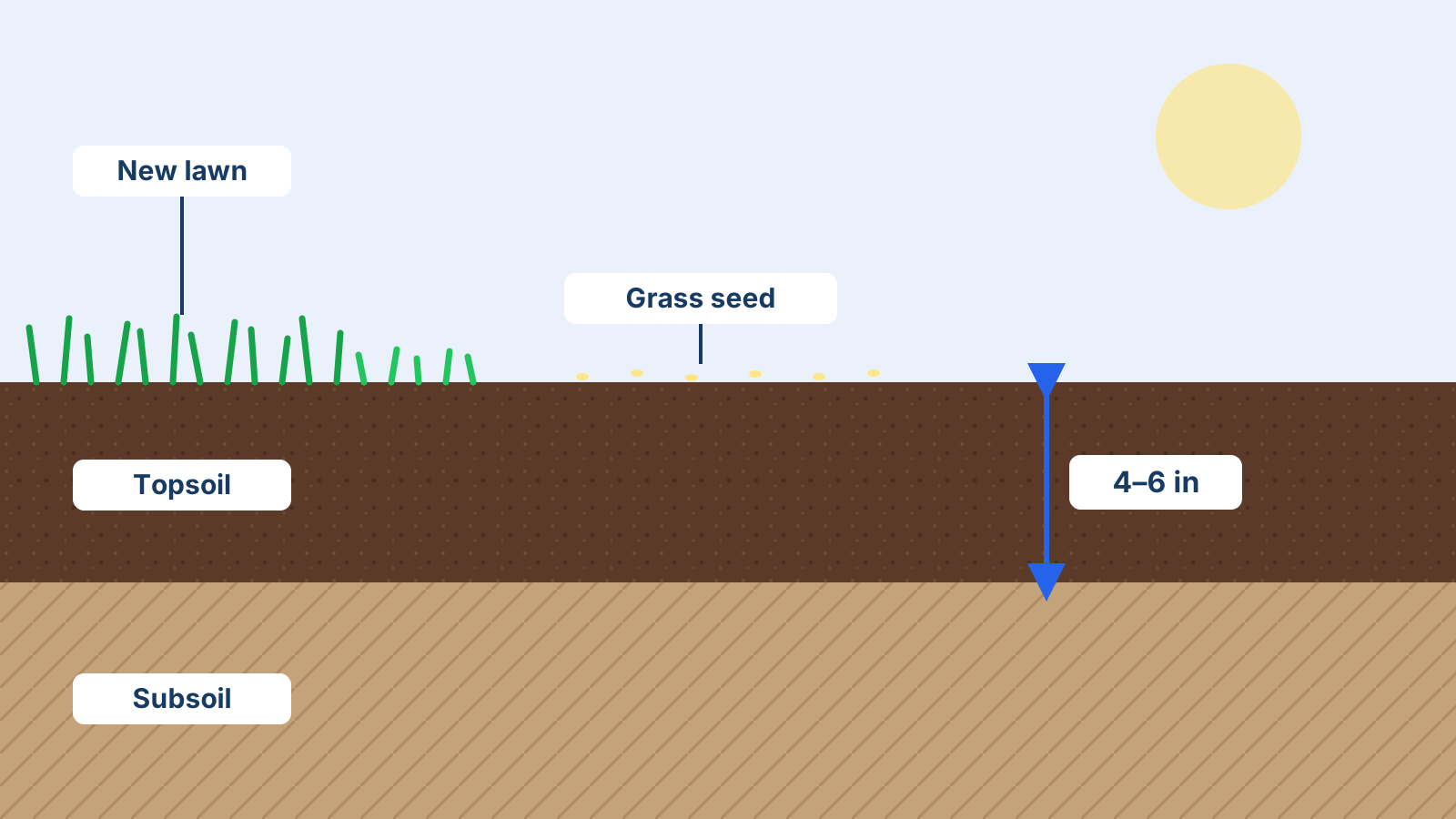
Estimate how much topsoil you need for a new lawn, top-dressing or levelling. Recommended depths, worked examples, settling allowance and weight for transport.
2 min read
22 free calculators for concrete, gravel, landscaping, pavers and lumber · imperial & metric
Explore all tools22 free calculators for concrete, gravel, mulch, topsoil, pavers and lumber, built on standard formulas with results you can take straight to your supplier.
BuildCalcWorld is a growing library of estimating tools for concrete, aggregates, landscaping, pavers, lumber and DIY projects. Each calculator accounts for the things that change a real order (waste, compaction, bag yield and unit conversions), so the number you get is one you can actually buy against.
Find calculators grouped by material and project type.
Showing 22 of 22 calculators
Estimate concrete cost per cubic yard and per square foot, with optional delivery, rebar and labour.
ConcreteCompare concrete, asphalt, gravel and paver driveway costs using your local prices.
Home ImprovementVolume in cubic yards and metres plus the number of pre-mixed bags for patios, pads and floors.
ConcreteCubic yards, cubic metres and estimated tons of gravel for any rectangular area.
Gravel & AggregateCubic yards, cubic feet and bag counts of mulch for garden beds.
LandscapingBoard feet, cubic volume and cost for hardwood and lumber purchases.
LumberConcrete volume for continuous wall footings or multiple pad footings.
ConcreteTopsoil volume, estimated weight and bag count for lawns and garden beds.
LandscapingVolume for round (tube form) or rectangular columns and piers.
ConcreteHow many 40, 60, 80 lb or 20–30 kg pre-mixed bags you need.
ConcreteConcrete volume for solid poured steps, including an optional top landing.
ConcreteBags of concrete for fence and deck post holes, minus the post volume.
ConcreteLayer-by-layer gravel quantities for a new or resurfaced gravel driveway.
Gravel & AggregatePounds or kilograms of seed for new lawns and overseeding by grass type.
LandscapingNumber of pavers for a patio or walkway, including joint spacing and waste.
Flooring & PaversCrushed-stone base and bedding sand quantities for paver installations.
Gravel & AggregateNumber of wall blocks, courses and cap blocks for segmental retaining walls.
Flooring & PaversTiles and boxes needed for a kitchen or bathroom backsplash.
Flooring & PaversDeck boards, rows, linear footage and screws for a rectangular deck.
LumberMixed resin volume, part A/B amounts and kits for tables, moulds and coatings.
Home ImprovementHow many recessed lights a room needs, with a grid layout, spacing and distance from the walls.
Home ImprovementPickets, posts, rails and fasteners for a picket fence of any length.
LumberNo black boxes. Every result comes from a documented formula and assumptions you can see and change.
Every calculator shows the formula it uses, the unit conversions involved and a worked example, so you can check the maths yourself.
Read the guidesDensities, bag yields, waste and compaction vary by product and supplier. Each one is an editable input, not a hidden constant.
Try a calculatorCalculations run entirely in your browser. Your measurements are never sent to a server and no account is needed.
Privacy policyWorked-example articles for when a quick estimate isn't enough.
Estimate how much topsoil you need for a new lawn, top-dressing or levelling. Recommended depths, worked examples, settling allowance and weight for transport.
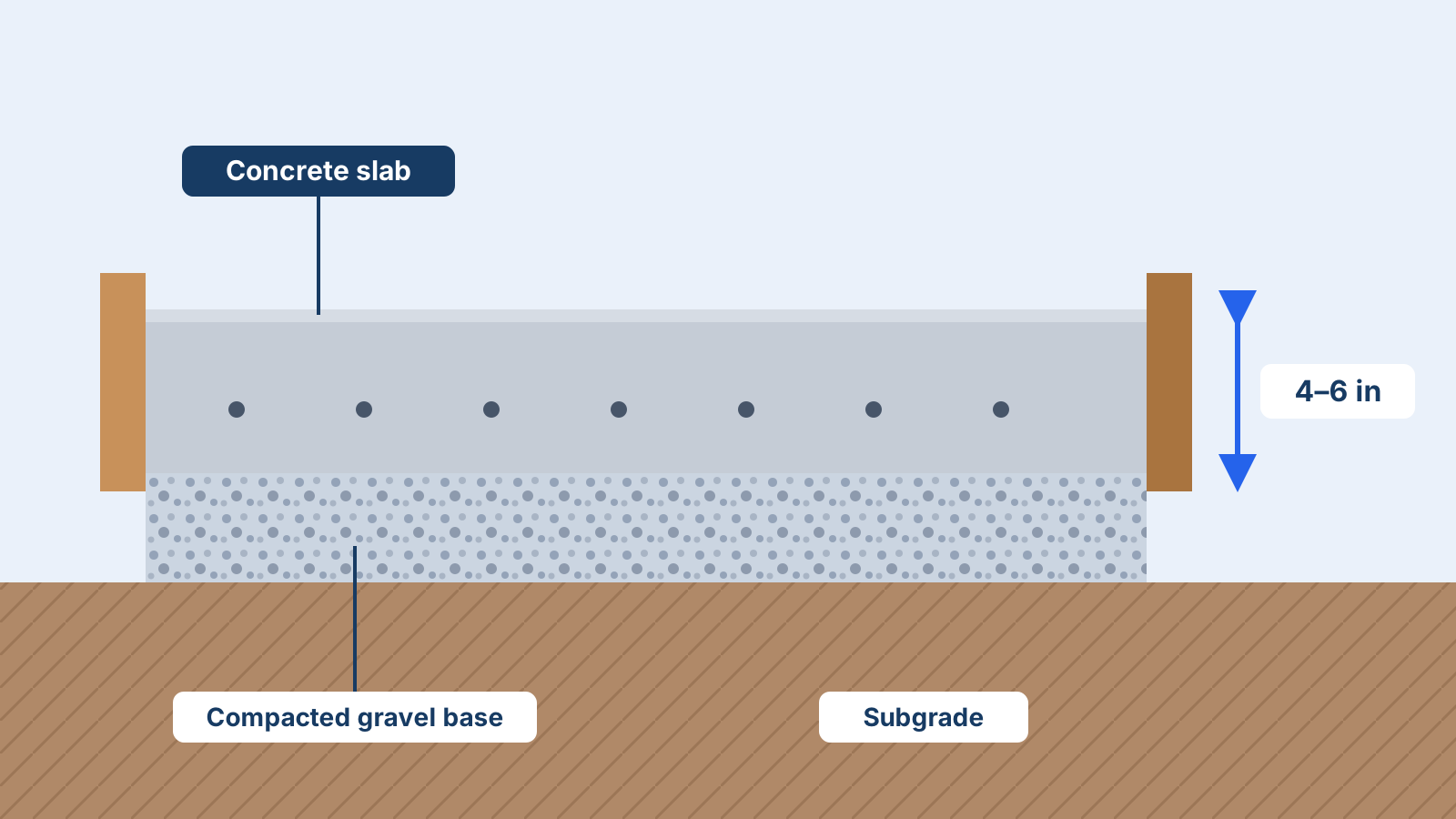
How thick should a concrete slab be? Practical thickness ranges for patios, walkways, shed bases, driveways and garage floors, plus how thickness affects cost.
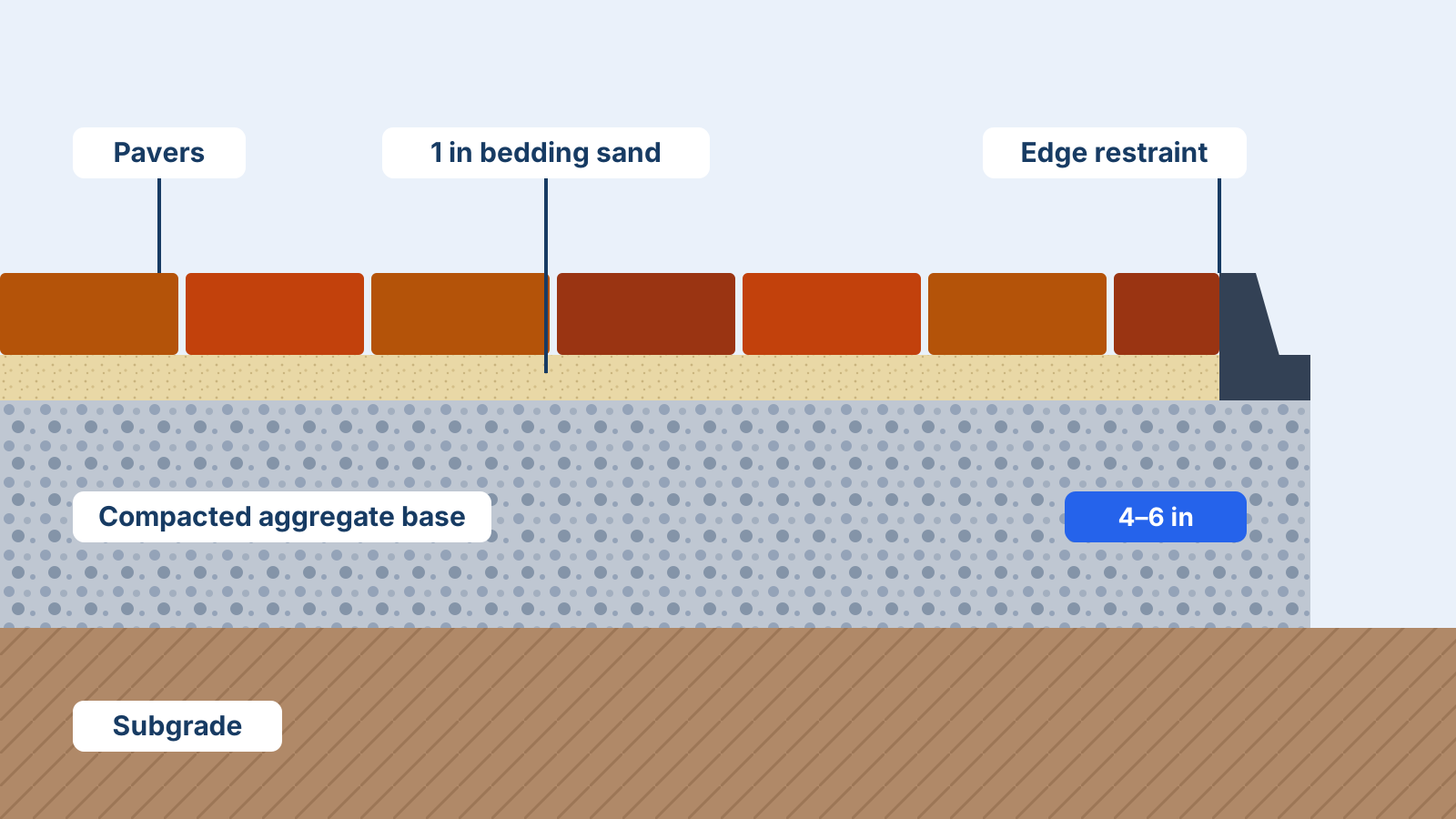
Learn how to calculate paver base gravel and bedding sand, choose the right base depth, account for compaction and convert to tons for ordering.
Common questions about estimating building materials. Still unsure? Contact us.
The maths is exact for the measurements you enter, but real projects vary: ground is uneven, products differ in density and yield, and some material is always lost. Treat results as a well-founded estimate, add a sensible waste allowance and confirm product specifications with your supplier.
Spillage, cuts, breakage, compaction and uneven subgrades all consume extra material. Typical allowances range from about 5% for simple concrete pours to 15% or more for patterned paving or tiling. Each calculator suggests a starting value you can change.
Yes. Every calculator has an imperial/metric toggle. When you switch, the values you have already entered are converted so you do not lose your measurements.
Divide cubic feet by 27, because a cubic yard is 3 ft × 3 ft × 3 ft. For example, 54 ft³ ÷ 27 = 2 yd³. One cubic yard is about 0.765 m³.
Bulk density depends on the type of stone or soil, particle size and moisture. That is why our calculators let you edit the density. Your supplier can give you the figure for the exact product you are buying.
No. All calculators run in your browser, are free to use and do not require an account. Your measurements are not sent to our servers.
Pick a calculator, enter your measurements and get a material list you can take to your supplier.