Concrete
Concrete Bags Calculator: How Many Bags Do You Need?
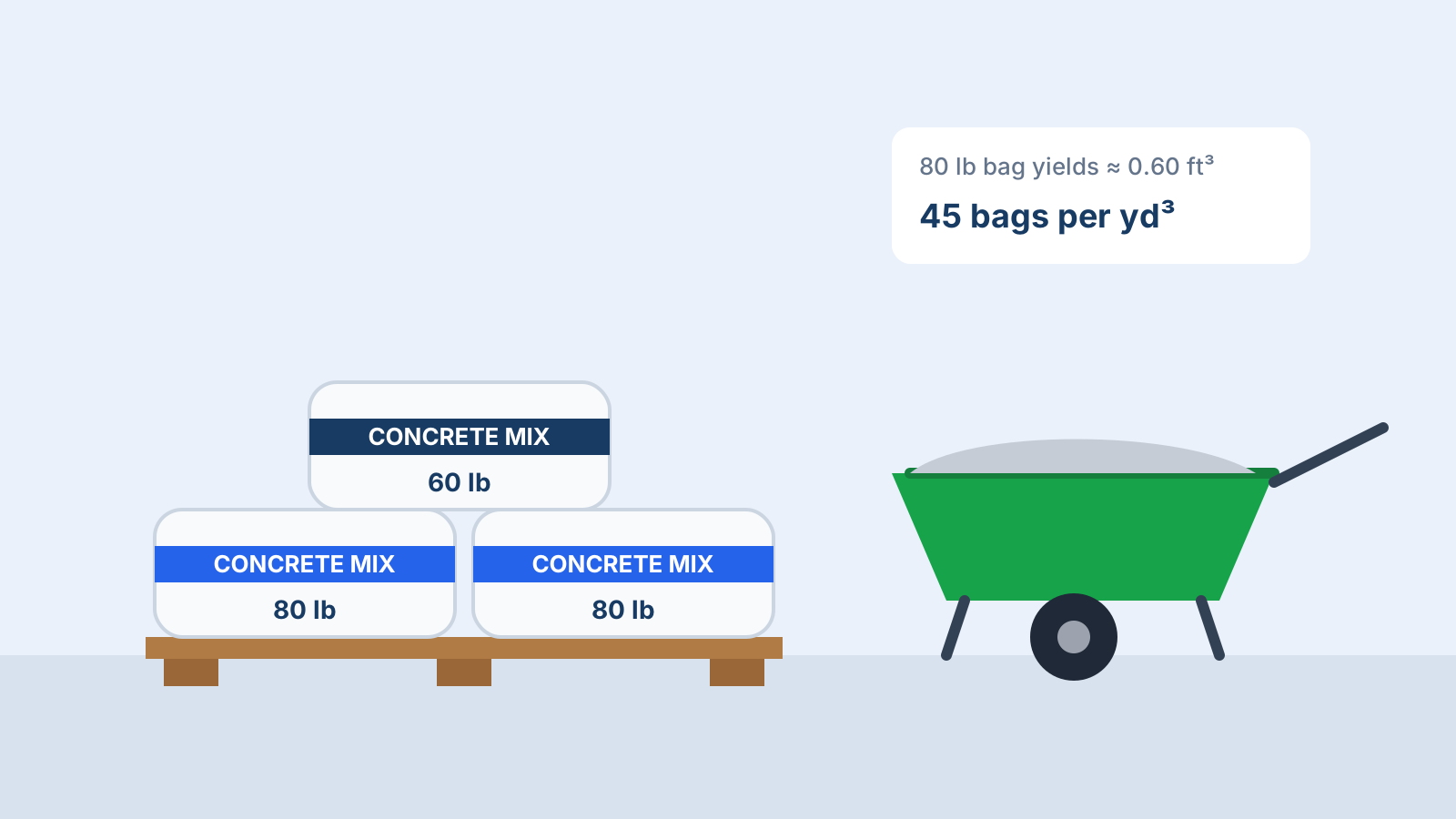
Understand concrete bag yields, convert volume into bags, and compare 40, 60 and 80 lb bags (and 20–30 kg bags) with worked examples and a quick reference table.
2 min read
22 free calculators for concrete, gravel, landscaping, pavers and lumber · imperial & metric
Explore all toolsFootings spread the load of walls, posts and columns into the ground. This calculator handles both continuous strip footings (enter the total run) and repeated pad footings (enter the size of one pad and the number of pads).
Enter your measurements and press Calculate to see quantities, a material breakdown and an optional cost estimate.
Footing width and depth are usually specified in inches or centimetres, while length is in feet or metres. The calculator converts everything to a common unit before multiplying.
A continuous footing 40 ft long, 16 in wide and 8 in deep, with 10% waste.
Result: Order roughly 1.5 yd³ of concrete.
Footing size depends on the load, soil bearing capacity and local code. A common rule for light residential walls is a footing twice as wide as the wall and as deep as the wall is thick, but always check your code or an engineer.
Yes, for small footings such as deck pads. For long continuous footings, the number of bags quickly becomes impractical and ready-mix is usually better.
In cold climates, codes generally require footings to bear below the local frost depth to prevent frost heave. Your local building department can tell you the required depth.
Understand concrete bag yields, convert volume into bags, and compare 40, 60 and 80 lb bags (and 20–30 kg bags) with worked examples and a quick reference table.
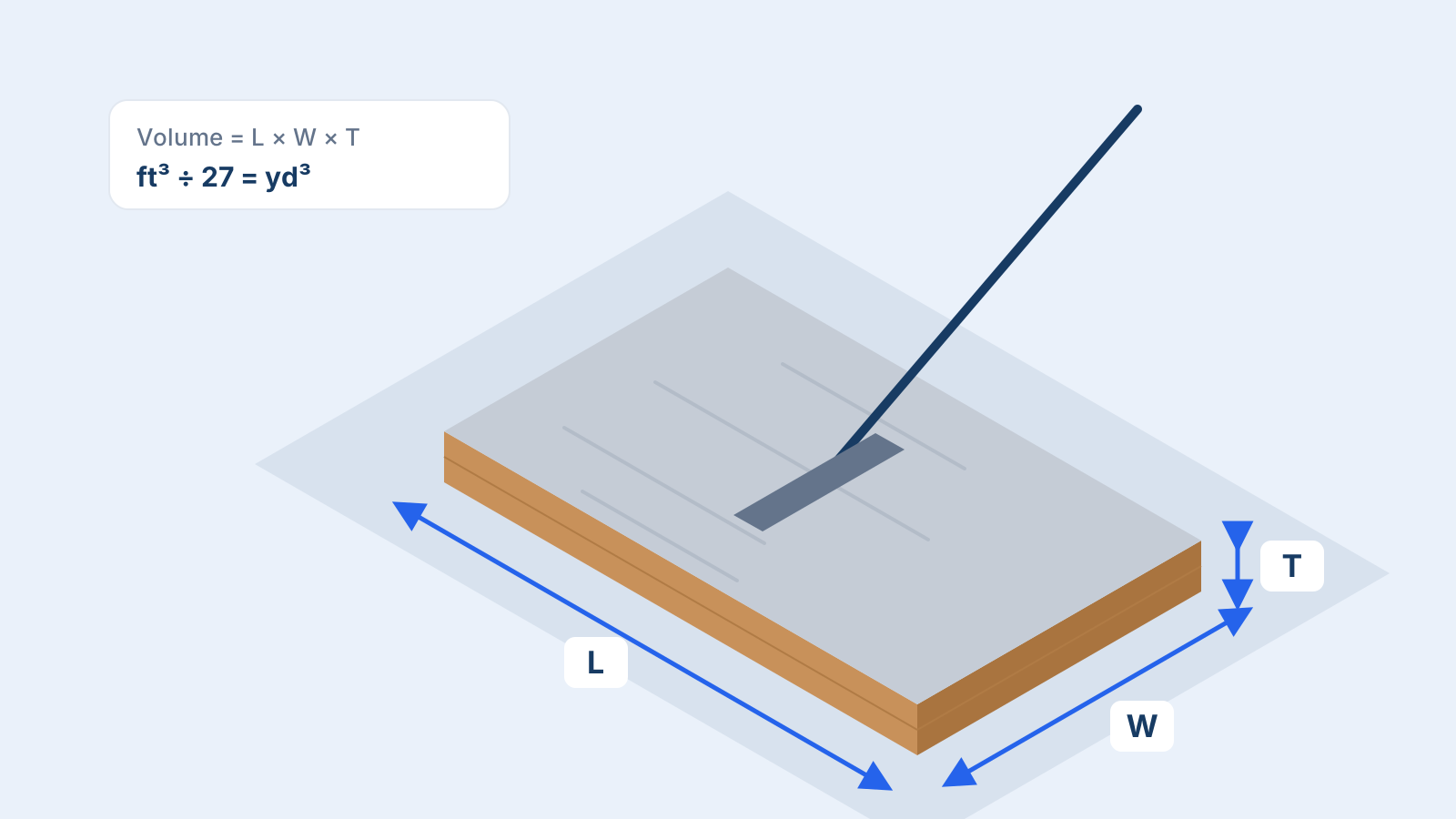
Learn how to calculate concrete for a slab step by step, convert to cubic yards or cubic metres, add the right waste allowance and decide between bags and ready-mix.
Results are estimates based on the measurements and assumptions you enter. Always confirm product specifications, local building codes and final quantities with your supplier or a qualified professional. See our disclaimer.