Pavers & Hardscaping
How to Calculate Paver Base Material
Learn how to calculate paver base gravel and bedding sand, choose the right base depth, account for compaction and convert to tons for ordering.
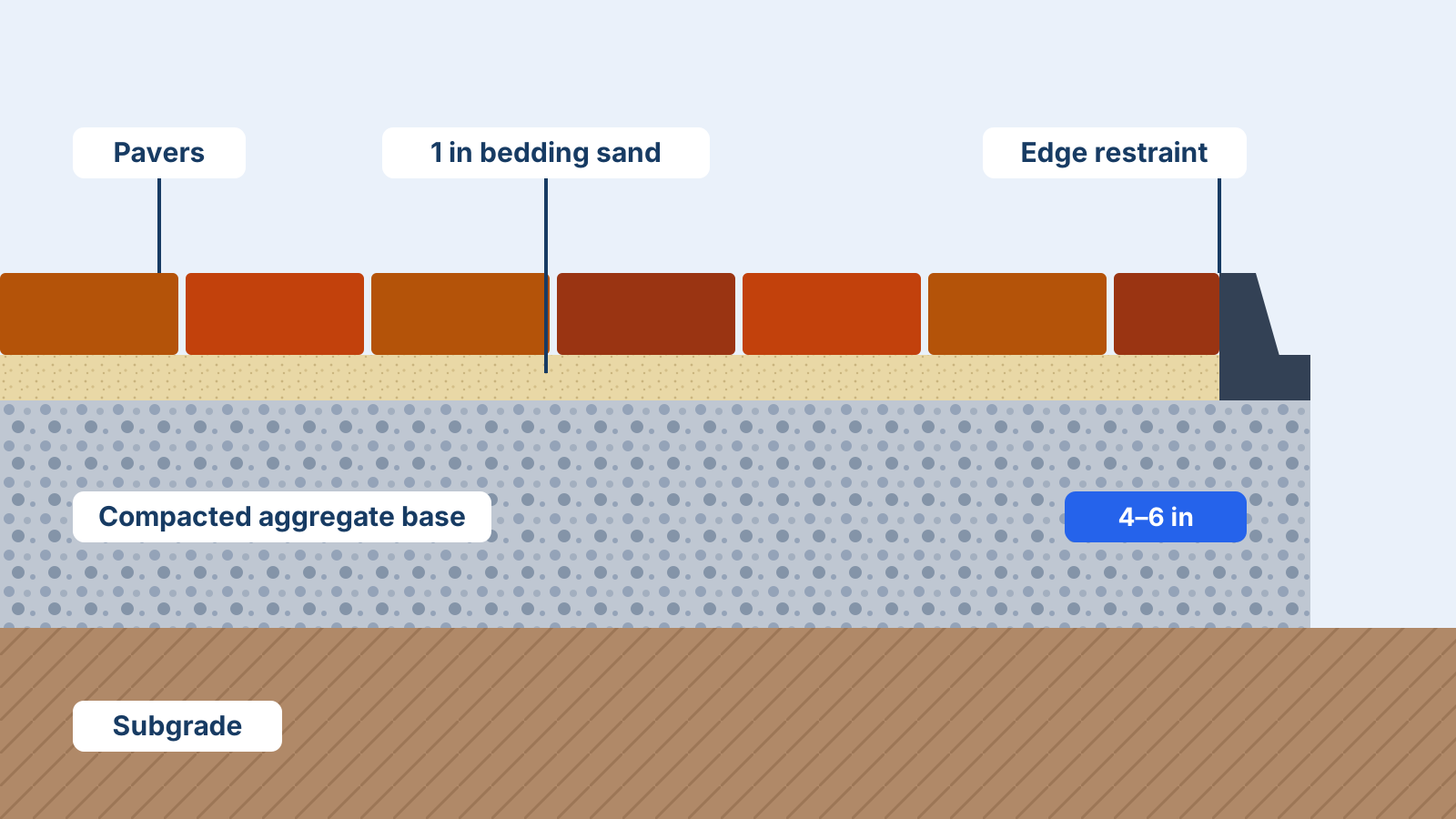
Pavers fail from the bottom up. Sinking, rocking and uneven pavers are almost always caused by a base that is too thin, poorly compacted or made from the wrong material.
This guide shows how to calculate both layers under a paver patio: the compacted aggregate base and the bedding sand.
The layers under a paver patio
- Subgrade: the native soil, excavated and compacted.
- Base: crushed stone with fines, compacted in lifts.
- Bedding layer: about 1 in (25 mm) of coarse concrete sand, screeded flat.
- Pavers, then joint sand.
How deep should the base be?
| Application | Typical compacted base depth |
|---|---|
| Walkways and patios (foot traffic) | 4–6 in (10–15 cm) |
| Driveways (cars) | 8–12 in (20–30 cm) |
| Clay soils or freeze-thaw climates | Add 2–4 in or more |
Manufacturers and industry bodies publish detailed guidance; follow your paver manufacturer's installation instructions where they differ.
Excavation depth
Total excavation = base depth + bedding sand + paver thickness. For a patio with a 4 in base, 1 in sand and 2⅜ in pavers, you dig about 7⅜ in below finished height, plus any slope for drainage.
Extend the excavation and base about 6 in beyond the paver edge so edge restraints sit on a solid base.
Calculating base and sand
Example
A 12 × 16 ft patio
- Base area including 6 in border: 13 × 17 = 221 ft²
- Base (4 in): 221 × 0.333 = 73.7 ft³ = 2.73 yd³
- With 20% compaction allowance: 3.27 yd³
- At 1.4 tons/yd³: ≈ 4.6 tons
- Bedding sand (1 in, paver area 192 ft²): 16 ft³ = 0.59 yd³
Result: Order about 3.3 yd³ (≈ 4.6 tons) of base and 0.6 yd³ of bedding sand.
Why 20%? Loose crushed stone with fines compacts substantially under a plate compactor. Allowances of 15–25% are common; ask your supplier for guidance on their product.
Tips for a long-lasting base
- Compact in lifts of no more than about 4 in, dampening the base slightly.
- Build the slope into the base (often around 1–2% away from buildings), not the sand.
- Never use the bedding sand to fill low spots; fix them in the base.
- Use a geotextile on soft clay to keep the base separate from the soil.
Try the Paver Base Calculator
Crushed-stone base and bedding sand quantities for paver installations.
Frequently asked questions
Can I use pea gravel as paver base?
Round pea gravel does not lock together and is not a good dense-graded paver base. Use angular crushed stone with fines, or an open-graded angular stone in a system designed for it.
How much paver base do I need per square foot?
At 4 in deep, each square foot needs 0.333 ft³ before compaction, or about 0.4 ft³ with a 20% compaction allowance.
Can I use stone dust instead of sand for bedding?
Some installers do, but many guidelines prefer coarse concrete sand because stone dust can hold water. Follow your paver manufacturer's recommendation.
About the author
Written by the BuildCalcWorld Editorial Team. Our guides explain standard estimating methods with worked examples you can verify. Material properties vary by product and region, so always confirm specifications with your supplier. Published . Learn more about us.
Related articles
 Gravel
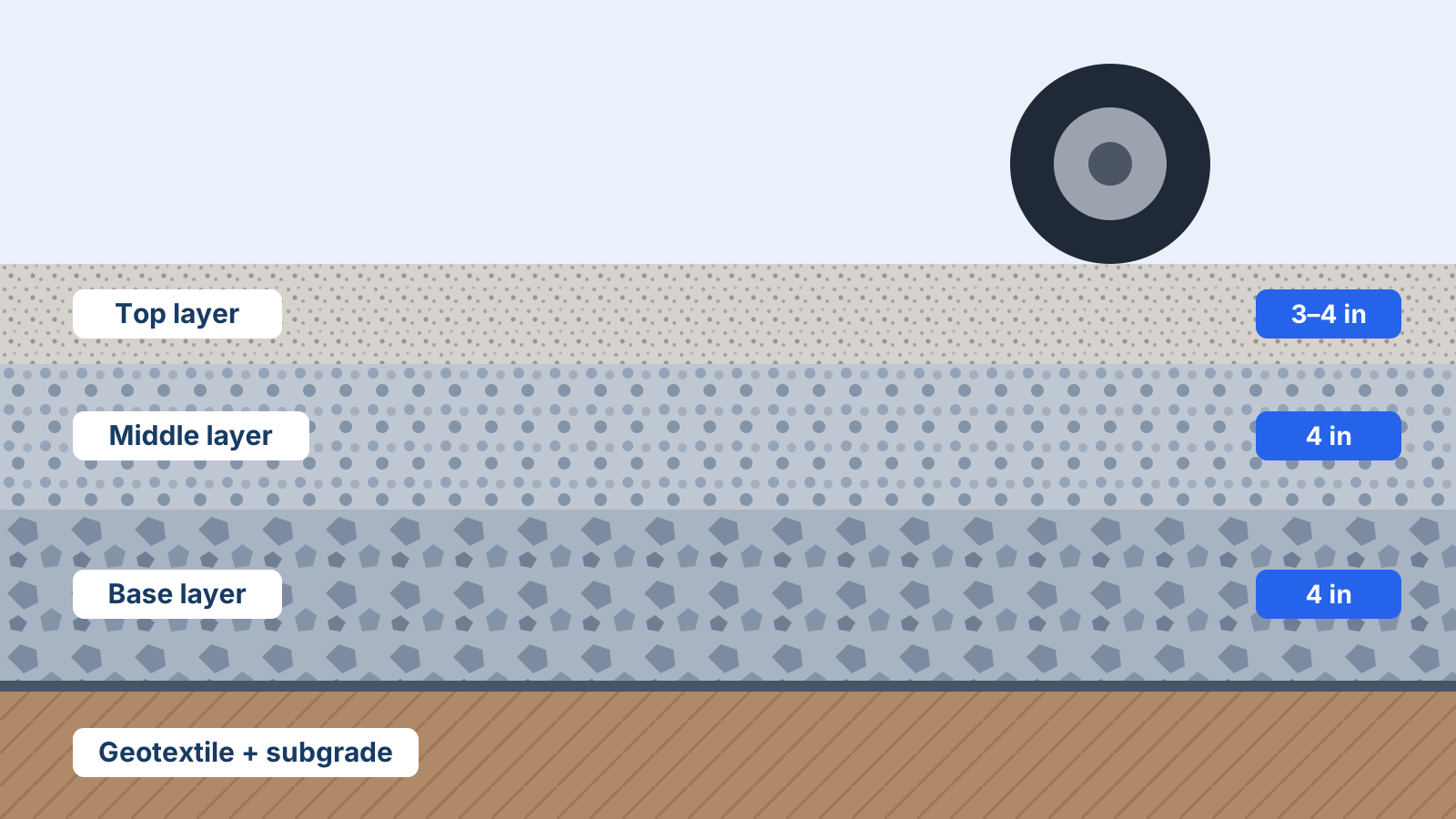
How Deep Should a Gravel Driveway Be?
Recommended gravel driveway depths for new builds, soft soils and resurfacing, with layer-by-layer guidance and the volume impact of each extra inch.
2 min read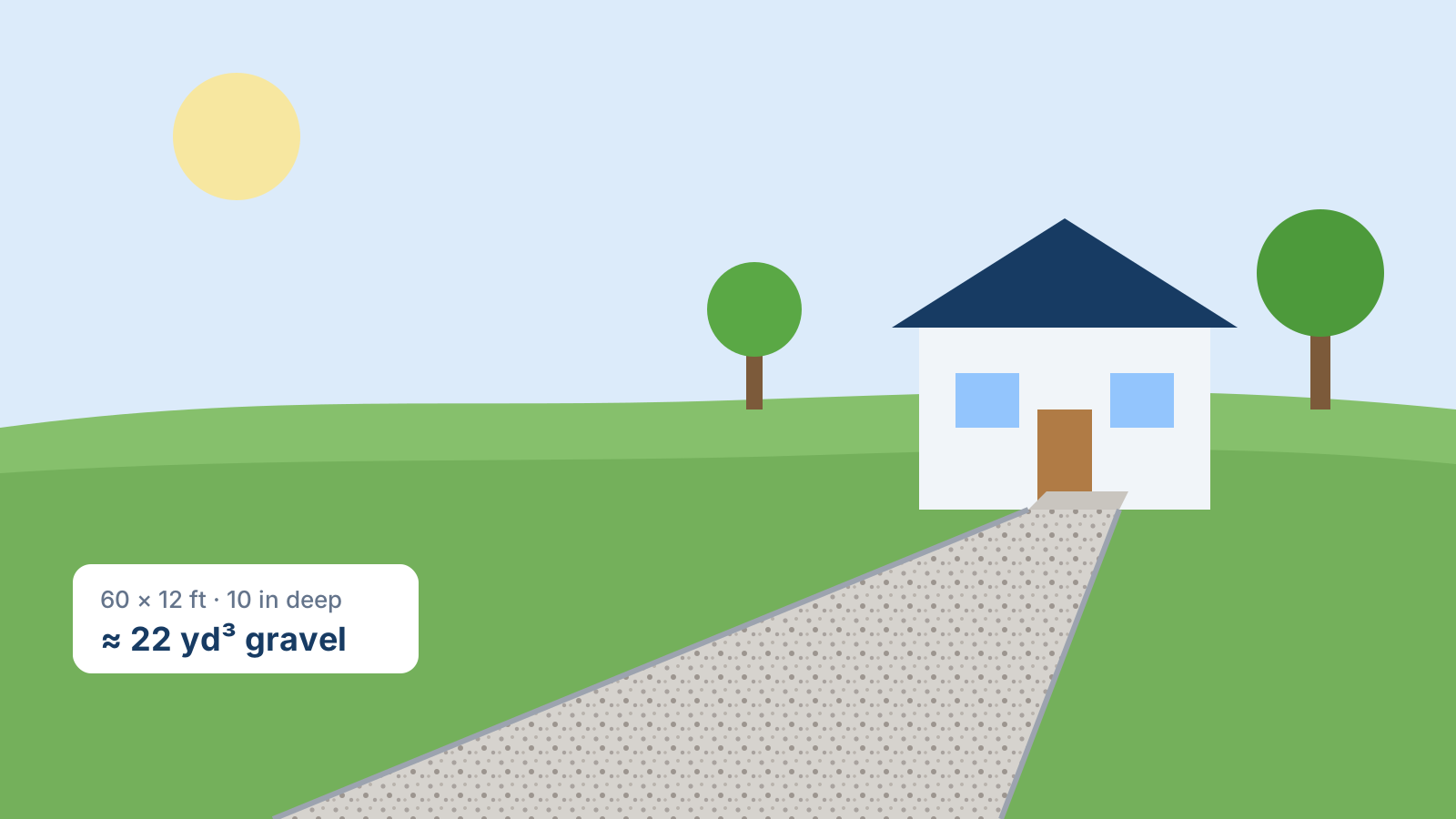 Gravel
How to Calculate Gravel for a Driveway
Step-by-step guide to calculating driveway gravel in cubic yards and tons, including layers, compaction and converting volume to weight with real examples.
2 min read