Pavers & Hardscaping
How to Calculate Paver Base Material
Learn how to calculate paver base gravel and bedding sand, choose the right base depth, account for compaction and convert to tons for ordering.
2 min read
22 free calculators for concrete, gravel, landscaping, pavers and lumber · imperial & metric
Explore all toolsA paver patio is only as good as what is underneath it. This calculator estimates the compacted crushed-stone base and the screeded bedding sand layer, giving volumes and weights for both.
Enter your measurements and press Calculate to see quantities, a material breakdown and an optional cost estimate.
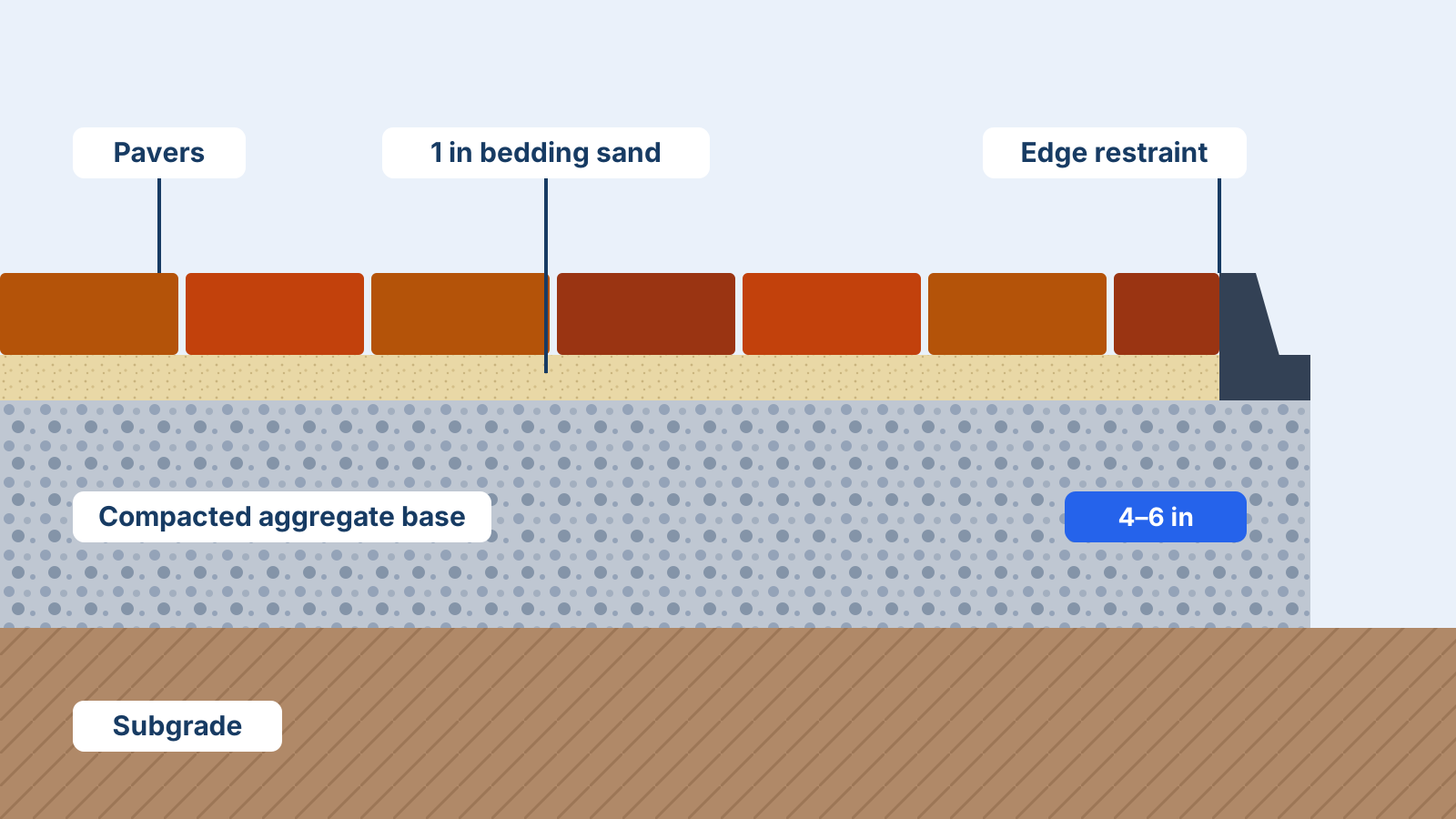
Crushed stone base compacts significantly when run over with a plate compactor, so extra material is needed to achieve the finished depth. Bedding sand is screeded loose, so no compaction allowance is applied.
A 200 ft² patio with a 4 in base, 1 in of bedding sand and 20% compaction allowance.
Result: Order about 3 yd³ of base and 0.6 yd³ of bedding sand.
A well-graded crushed stone with fines (often sold as paver base, road base or crusher run) compacts into a firm, stable layer. Some open-graded systems use clean angular stone for drainage instead.
About 1 in (25 mm) is standard. Thicker sand layers can lead to uneven settlement, so fix low spots in the base rather than with extra sand.
Learn how to calculate paver base gravel and bedding sand, choose the right base depth, account for compaction and convert to tons for ordering.
Results are estimates based on the measurements and assumptions you enter. Always confirm product specifications, local building codes and final quantities with your supplier or a qualified professional. See our disclaimer.