Concrete
How to Calculate Concrete for Fence Posts
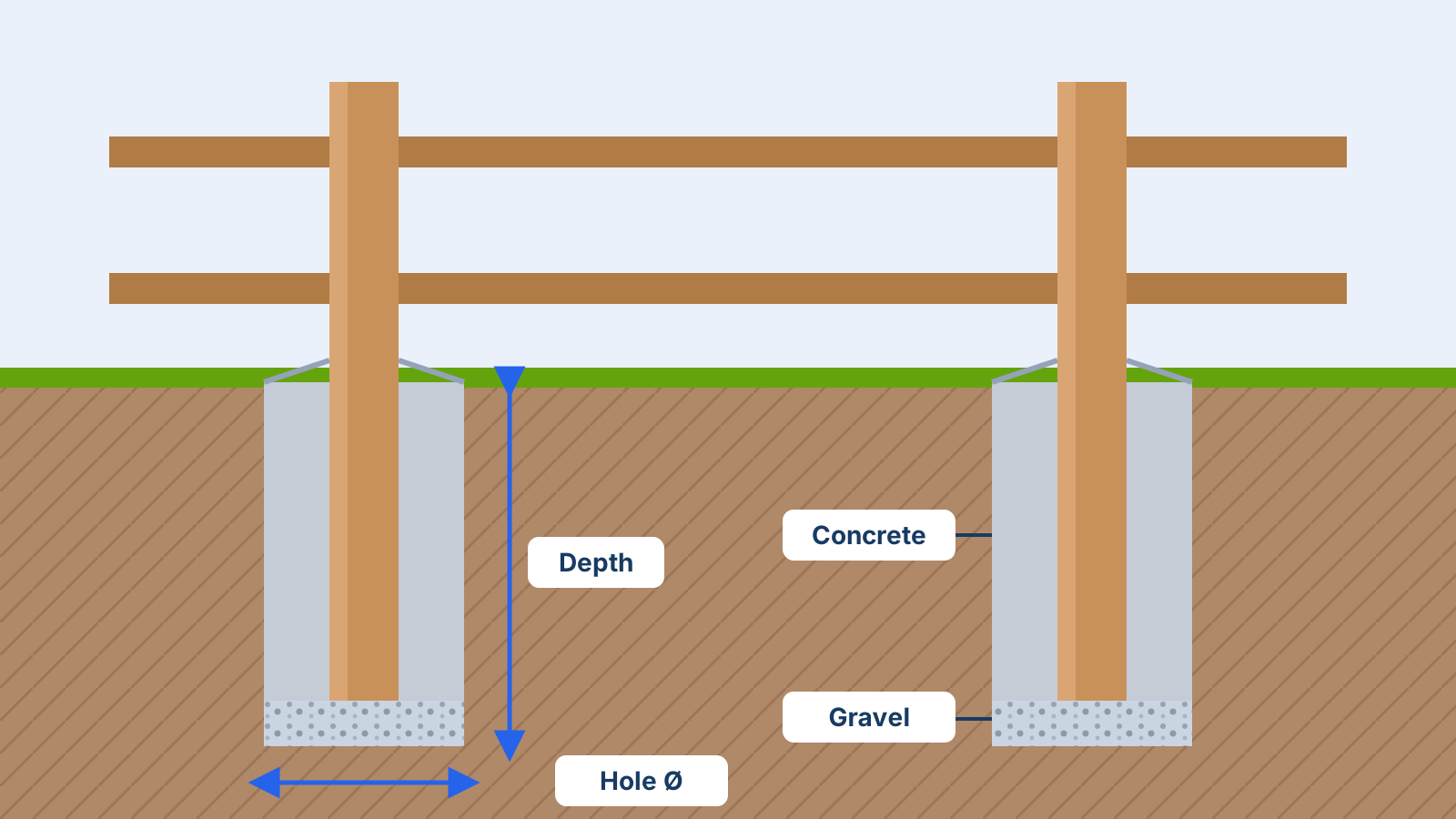
Calculate how much concrete you need per fence post, including hole size, post displacement and gravel base, with examples for 4×4 and 6×6 posts.
3 min read
22 free calculators for concrete, gravel, landscaping, pavers and lumber · imperial & metric
Explore all toolsEnter the length of your fence, the picket width and the gap you want between pickets. The calculator counts pickets, posts, rails and fasteners, subtracts gate openings and adds spare pickets for splits and cuts.
Enter your measurements and press Calculate to see quantities, a material breakdown and an optional cost estimate.
Each picket takes up its own width plus one gap. Adding one gap to the length accounts for having one fewer gap than pickets on a run.
Posts are counted for a single straight run. Corners and gates usually need extra or heavier posts.
A 100 ft fence with one 4 ft gate, 3.5 in pickets, 2.5 in gaps, posts every 8 ft and 2 rails, with 5% spare pickets.
Result: 203 pickets, 14 posts and 26 rails.
Traditional picket fences often use gaps of about 1½–3 in (40–75 mm), roughly half to one picket width. Pool fences and some local codes set a maximum gap, so check the rules that apply to you.
With 3.5 in pickets and 2.5 in gaps, each picket takes 6 in, so an 8 ft (96 in) section holds about 16 pickets. Narrower gaps need more.
A common guide is about one-third of the post's above-ground height, and below the frost line where the ground freezes. Use the fence post concrete calculator to work out concrete for the holes.
Calculate how much concrete you need per fence post, including hole size, post displacement and gravel base, with examples for 4×4 and 6×6 posts.
Results are estimates based on the measurements and assumptions you enter. Always confirm product specifications, local building codes and final quantities with your supplier or a qualified professional. See our disclaimer.